Premium Fucoidan Supplements Made in Japan

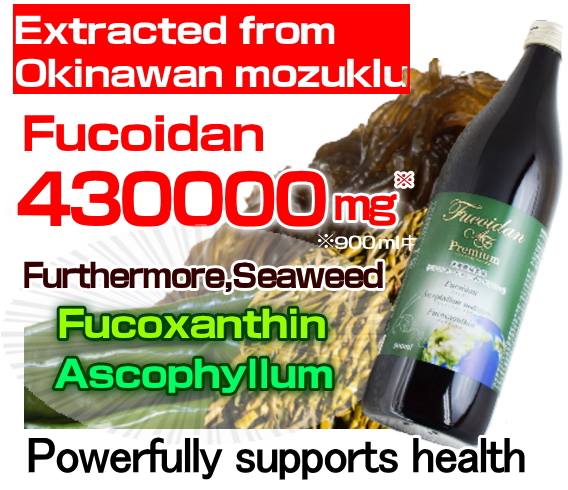

Fucoidan AF Premium is a carefully formulated fucoidan supplement designed with attention to ingredient quality, purity, and overall balance. It combines three major brown seaweed components — fucoidan, fucoxanthin, and ascophyllan — as part of a daily wellness routine.

Start Here — Learn About Fucoidan and Choose the Right Product
If you are new to fucoidan, please start with our introduction and basic guide pages.
If you are comparing products, see our selection guide and comparison pages to understand key differences in ingredients and formulation.




Our Commitment to Fucoidan Product Development
We have developed and offered multiple fucoidan products, including low molecular weight and nano-processed formulas. Our mission is to continually improve quality and deliver products that customers can truly feel the difference.

Each ingredient is carefully selected based on scientific information, and formulations are designed to maximize synergy between functional components.
Among the many fucoidan products available, this is one we confidently recommend for its quality and ingredient content.
Triple Seaweed Component Formula
Fucoidan + Fucoxanthin + Ascophyllan
Fucoidan AF Premium features a unique triple-component seaweed formula. In addition to high-purity fucoidan, it includes water-soluble fucoxanthin and ascophyllan, creating a comprehensive and well-balanced supplement.
Recommended for Both New and Experienced Users
This product is recommended for people trying fucoidan for the first time as well as those looking for a higher-content, higher-quality alternative to their current fucoidan supplement.
 Compared to our previous product, Nano Fucoidan Premium, Fucoidan AF Premium
contains a significantly higher ingredient content and an improved formulation
balance. Customers who previously used Nano Fucoidan Premium have shared
positive feedback such as, “I’m glad the ingredient content has increased.”
Compared to our previous product, Nano Fucoidan Premium, Fucoidan AF Premium
contains a significantly higher ingredient content and an improved formulation
balance. Customers who previously used Nano Fucoidan Premium have shared
positive feedback such as, “I’m glad the ingredient content has increased.”
About Fucoidan and Brown Seaweed Components
- What Is Fucoidan?
Fucoidan is a natural compound derived from brown seaweed and was first discovered and reported in 1913 by Professor Kylin at Uppsala University in Sweden. At the time, it was named “fucoidin,” but it was later renamed “fucoidan” in accordance with international carbohydrate nomenclature standards.
Since its discovery, many scientific studies have examined the physicochemical properties of fucoidan. It has long been known that fucoidan is a sulfated polysaccharide found in the cell walls of brown algae, with fucose as its primary component. While various research findings have been published regarding its detailed structure and characteristics, a single unified definition was not always established. Today, fucoidan is generally defined as a sulfated polysaccharide mainly composed of fucose, combined with sulfate groups and uronic acids.
The term “fucoidan” does not refer to one single chemical structure. Instead, it is a general term for a group of fucose-rich polysaccharides derived from brown seaweed.
In addition to fucose, fucoidan may also contain other sugars such as galactose, mannose, xylose, and uronic acids, depending on the seaweed source and extraction method.
Brown seaweeds contain a wide variety of natural compounds, including carbohydrates such as fucoidan. They also provide proteins, lipids, and essential minerals, with the specific nutrient composition varying by species.
- Different Even Among Brown Seaweeds
Fucoidan has been extracted from many different species of brown seaweed and has been widely studied in numerous scientific research projects.
There are approximately 240 genera of brown seaweeds worldwide. Even within the same species, the chemical composition can vary greatly depending on factors such as harvesting location, season, water depth, and growing conditions. In addition, different parts of the same seaweed may contain significantly different components.
The amount of fucoidan also differs by seaweed species. Studies show that brown seaweeds exposed to air for longer periods during low tide — meaning they spend more time in relatively dry conditions — tend to contain higher levels of fucoidan.
For example, mozuku, which grows in relatively shallow waters, has been reported to contain more fucoidan than kombu, which typically grows in deeper ocean areas.
- Safety of Fucoidan
Fucoidan has gained attention for its potential benefits across a wide range of health and research fields. However, without verified safety, no functional ingredient can be considered truly valuable. Safety data on alginic acid — another compound derived from seaweed — show that it has been recognized by the U.S. Food and Drug Administration (FDA) as a Generally Recognized as Safe (GRAS) substance, and this safety recognition is also accepted in Japan.
In addition, carrageenan has undergone multiple safety evaluations, including major reviews conducted in 1969 and 1973. Based on accumulated scientific evidence, its safety profile was confirmed. In 1984, the acceptable daily intake (ADI) guideline was revised from 0–70 mg per kilogram of body weight to “not specified,” indicating a high margin of safety under normal use conditions.
Fucoidan AF Premium



 900ml Liquid
 Capsule
 Trial Set
 30ml Liquid
Fucoidan
- What is fucoidan?
- What is fucose?
- What is sulfate group?
- Ingesting fucoidan from food
- Choose Fucoidan products
- Frequently Asked Questions (FAQ)
Fucoidan AF Premium
- Why It Is Chosen
- Fucoidan Ingredients
- Fucoxanthin Ingredients
- Ascophyllum Ingredients
- Amino Acid Ingredients
- Trusted Safety
- Credibility and Quality You Can Trust
- Compared with low molecular fucoidan
- Difference with Nano Fucoidan
- How to drink・Storage instructions
Fucoidan Kenkodo
Official SNS


Catalog
Fucoidan AF Premium
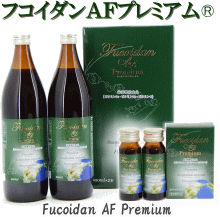

Message from Health Advisor

A Certified Health Management Advisor supports health from a perspective different from that of medical doctors. Their role includes planning environments, physical well-being, and lifestyles that help prevent illness before it occurs, as well as sharing accurate knowledge to maintain and promote health. They also engage in health management activities in daily life and work to protect people’s health in businesses, local communities, and households.By providing information to help reduce health issues related to lifestyle habits, we hope to support and empower you to enjoy each day with a smile.
SHOP INFO
Fucoidan Kenkodo
2-8-1 Kasugabaruhigashimachi, Kasuga-shi, Fukuoka 816-0801, Japan
TEL 0120-251-334 (9:00~21:00)
 LOHAS Co., Ltd. is a "Fukuoka Prefecture Childcare Support Declaration Company." Fukuoka Prefecture No. 16 LOHAS Co., Ltd. is a "Fukuoka Prefecture Childcare Support Declaration Company." Fukuoka Prefecture No. 16 |
